
What is the Yoga of Sound, exactly?
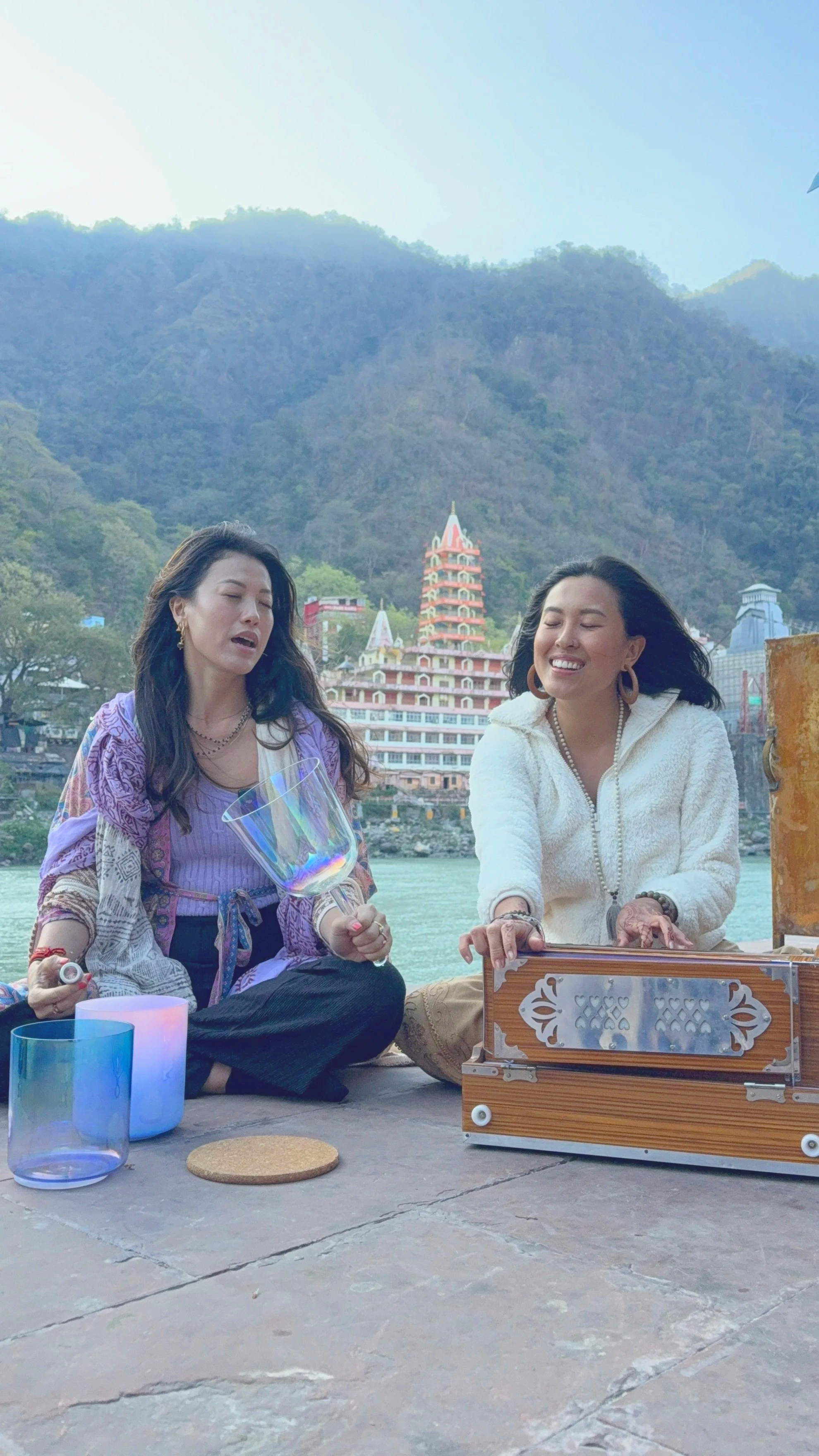
When we think of sound healing today, the image that often comes to mind is someone lying comfortably on a mat, eyes closed, surrounded by the resonant tones of singing bowls.
There is certainly beauty and value in this experience. But my understanding of sound as a contemplative practice began somewhere quite different.
I spent a month in Rishikesh, India, immersed in the practice and study of Nada Yoga—the yoga of sound and vibration. It was there that I began to understand that working with sound is not simply about receiving soothing vibrations. Sound can be an active practice of meditation, awareness and connection.
Nada can be translated as sound or vibration. In Nada Yoga, we learn to listen—not only to the sounds around us, but increasingly to the subtler experiences within.
We worked with mantra, chanting, music, breath and our own voices. Rather than trying to empty the mind, sound gave the mind somewhere to rest its attention. We could follow a mantra, notice the resonance of a note, feel vibration travelling through the body, and eventually observe what remained when the sound disappeared.
In this way, sound became a pathway into silence.
One of the most meaningful discoveries for me was recognising that perhaps the most accessible sound-healing instrument we possess is one we carry with us everywhere: our own voice.
When we hum, chant or sing, we do not simply hear sound externally—we experience vibration from within. Vocalisation naturally works with the breath, often extending our exhalation, while giving us an embodied point of focus. Through mantra, the repetition of sound can also become meditative, drawing scattered attention back towards a single intention or vibration.
This is why I have come to see sound healing as something much broader than a sound bath.
Sometimes sound is received. Sometimes it is created.
One of my most treasured memories from that month was singing mantras at sunrise beside the River Ganga with my friend Francesca. As the morning light began to appear over Rishikesh, we sat together by the river and simply sang.
It remains one of those experiences that is difficult to fully articulate. There was something about offering our voices into that landscape that made the practice feel both deeply personal and somehow much larger than either of us.
Perhaps that is what sound has continued to teach me: we don't only experience vibration around us; we can create it from within.
“Nada entraps the mind… Therefore you can control the mind through the practice of Nada Yoga.” — Swami Sivananda