
Which Corporate Wellness Activities Does Your Team Actually Need?
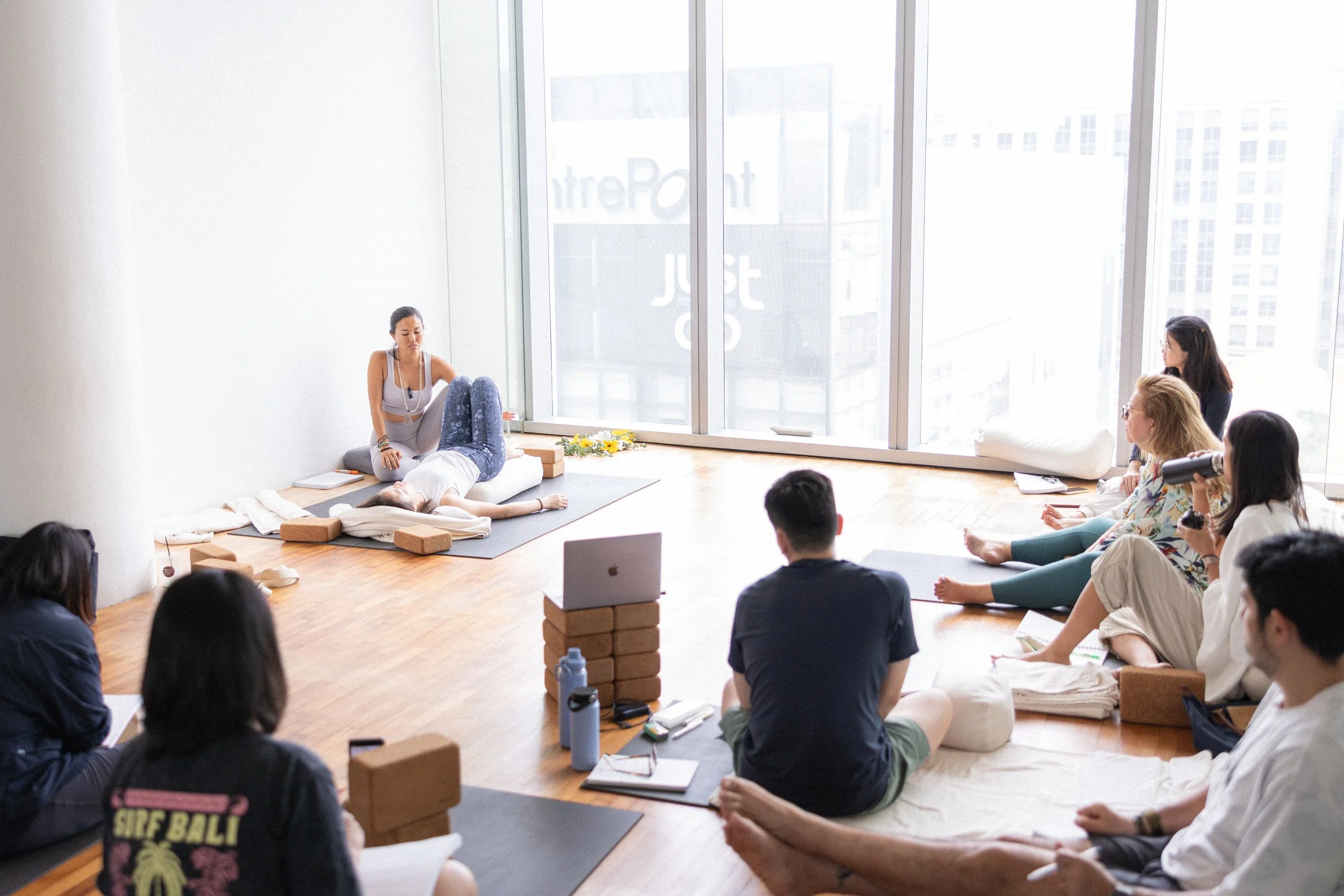
When organisers begin searching for wellness activities, the request can sound deceptively simple.
“Our team is tired. We would like to do something for them.”
From there, it is tempting to look through a menu of options and choose what appears most enjoyable: yoga, meditation, sound healing, a seminar or perhaps something more interactive.
But tiredness does not always look the same.
One team may be physically exhausted after an intense period of work.
Another may be mentally restless, unable to stop thinking about what needs to be done next.
Some teams are functioning well on the surface but have become disconnected from one another.
Others may want to rest, yet find that slowing down feels almost impossible.
This is why I have learned not to begin with the activity.
I begin by asking: What is the team experiencing right now?
Begin with the need, not the programme
Corporate wellness activities are sometimes chosen according to what is popular, convenient or easy to fit into the calendar.
Recent conversations about workplace wellbeing have even introduced the term carewashing.
A 2024 Harvard Business Review article used it to describe organisations that signal care through visible wellbeing initiatives while leaving an unsustainable working culture untouched.
The concern is not that yoga, mindfulness or other wellness activities are without value. It is that an activity does not become meaningful simply because it has been placed under the banner of wellbeing.
An activity can be well facilitated and still feel mismatched to the people in the room.
A highly energetic yoga session may feel uplifting for a team that has been sitting at their desks all week. For people approaching exhaustion, however, it may feel like another demand on a body that is already asking for less.
A long, silent meditation may sound calming. Yet for someone whose thoughts have been racing all day, being asked to become completely still without any preparation can feel uncomfortable rather than restful.
Even team bonding can miss the mark if people are expected to be cheerful, competitive or openly vulnerable when they do not yet feel safe enough to connect.
Choosing well begins with recognising that people cannot always receive what we believe they should need. We have to meet them where they are.
When the team is exhausted
There is often an instinct to energise a tired team.
We want to lift the mood, restore motivation and help everyone return to work feeling refreshed. But sometimes the most caring response to exhaustion is not more stimulation.
It is permission to stop.
Restorative Yoga can be especially supportive here because the practice does not ask participants to stretch further, perform a posture or achieve a particular state. The body is supported with props and given time to settle.
An immersive sound healing experience can offer a similar sense of receiving rather than doing. Participants are not required to analyse, respond or produce an outcome. They are invited to rest while sound provides a gentle point of focus.
For a team accustomed to being productive, this can feel unfamiliar at first. Rest without an objective may even feel uncomfortable.
That discomfort tells us something about how deeply performance can become woven into our sense of worth.
A tired team may not need to leave the session feeling transformed. It may be enough for people to experience what it feels like to be supported without being asked for anything in return.
When stress is being held in the body
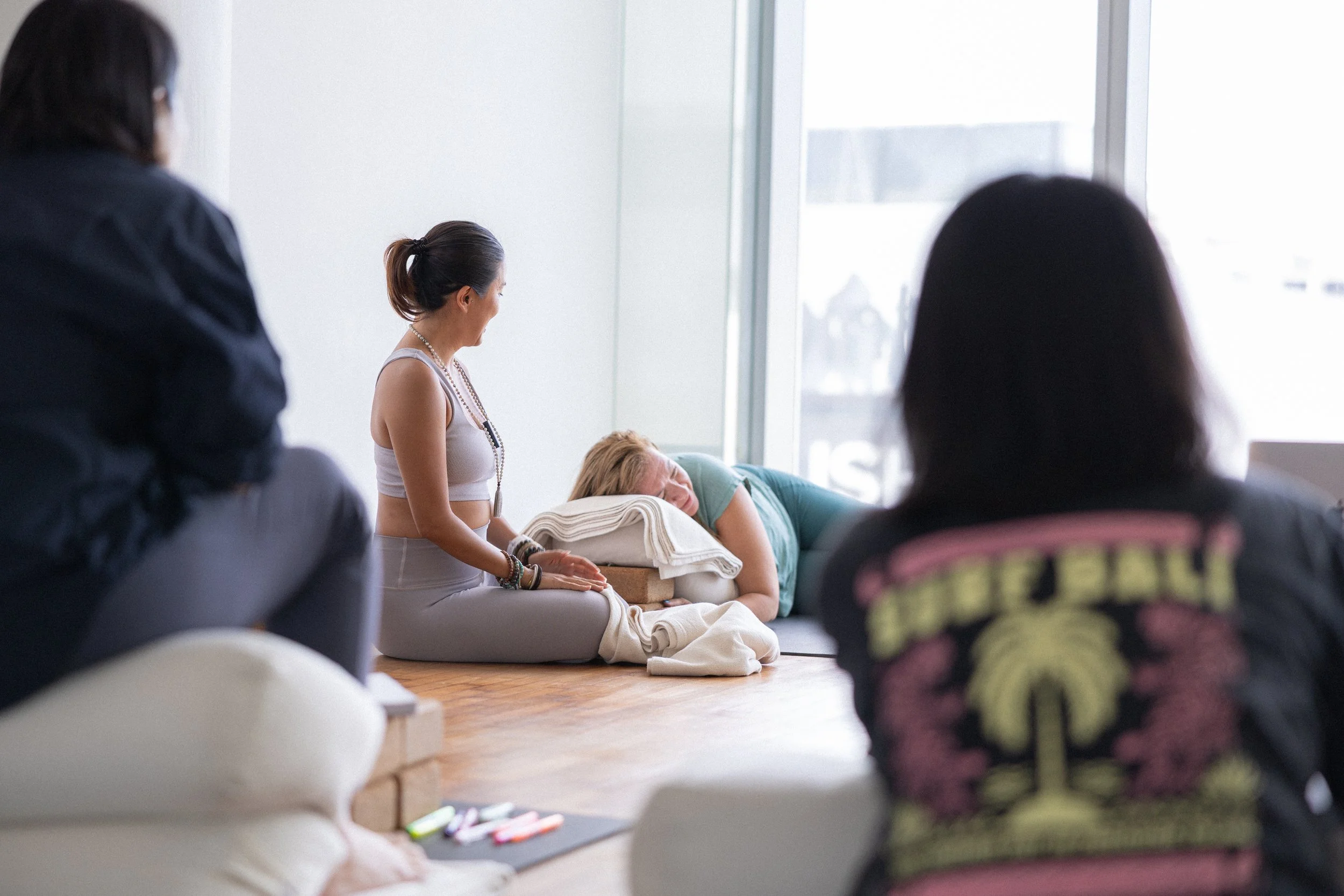
Some teams are tired, but also restless.
People may have spent hours sitting, moving between screens and carrying tension in the jaw, shoulders, back or hips. They may benefit from movement, but not necessarily from a fast or physically demanding class.
An accessible, alignment-focused Hatha Yoga practice can help participants move with greater awareness. When informed by the principles of yoga therapy, the practice can also be adapted so that different bodies are not expected to move in exactly the same way.
Gentle breathwork may be introduced alongside movement.
I do not think of the breath as a command to calm down. Telling someone to “just breathe” can feel dismissive when they are under genuine pressure.
Instead, breath awareness creates an opportunity to notice. Is the breath shallow? Is it being held? Does the exhalation feel rushed?
We are not trying to force the body into relaxation. We are beginning a conversation with it.
If your team is carrying the effects of long hours at desks, screen fatigue or physical tension, explore Yoga for the Workplace as a practice shaped around your team’s energy, needs and level of experience.
When the team cannot slow down
Sometimes people arrive at a wellbeing session carrying the momentum of the entire day.
They may still be thinking about an unfinished email, replaying a difficult conversation or anticipating the meeting that follows. Asking them to move immediately from urgency into silence can be too abrupt.
In these situations, the activity may need to create a gradual descent.
A small amount of mindful movement can help gather attention back into the body. Breathwork can begin to soften the pace. Sound or guided meditation can then offer something for the mind to rest upon before moving into stillness.
This is one reason I often bring different elements together rather than treating yoga, mindfulness and sound as completely separate practices.
People do not always know how to switch off simply because the calendar says it is time to relax. Sometimes they need to be gently accompanied there.
When the team feels disconnected
Not every tired team needs more quiet.
Some are tired because they have been working alongside one another without feeling meaningfully connected. Communication may have become purely transactional: requests, deadlines, approvals and updates.
In this situation, team bonding can be helpful—but connection does not have to mean competition or forced disclosure.
A Mindfulness and Connection session may allow people to listen and relate in a way that feels more human, without asking anyone to reveal more than they are comfortable sharing.
Heart Songs offers another kind of shared experience through voice, mantra and song. When people sing together, the focus is not on individual performance. They listen, respond and find a rhythm with one another.
For a moment, harmony becomes something the group is not only discussing, but experiencing.
This form of connection can be especially meaningful for teams that spend most of their time communicating through screens or speaking only about work.
When the team needs to understand what it is experiencing
There are also times when people need context before they are ready for a practice.
A seminar can help employees understand the science of stress, the nervous system and why certain responses begin to appear under prolonged pressure. It can offer language for experiences that people may have noticed but never understood.
This is part of building wellbeing literacy.
When people understand why the body responds as it does, practices such as yoga, mindfulness and breathwork can feel less abstract. They are no longer simply being told to relax. They are learning to recognise their own patterns and discovering what may support them.
A seminar does not need to remain entirely intellectual. Even a brief reflective or breathing practice can help connect what is being discussed with what participants are experiencing in the moment.
What would feel supportive today?
Before choosing an activity, I would encourage organisers to consider what the team has recently been moving through.
Has there been a demanding launch, restructuring or period of uncertainty? Are people physically tired, mentally overstimulated or emotionally disconnected? Do they need to learn something, move their bodies, relate to one another—or simply rest?
The timing matters too.
A lively movement practice may work beautifully at the start of a team day. Restorative Yoga or sound healing may be more appropriate after an intense period of work. A seminar can create a shared foundation for a longer wellbeing programme, while reflective practices can help a team pause during times of transition.
Whatever the format, it should be offered at a point when people have enough space and energy to engage with it.
The activity is only the beginning
The right activity is a meaningful starting point, not a complete solution. There is no shortcut to wellbeing, but a well-chosen experience can create an opening.
It can help people recognise how much they have been carrying. It can give a team a different way of being together. It can offer an experience of rest that someone may not have realised they needed.
When choosing wellness activities, perhaps the most useful question is not, “What should we organise?” but, “What would help our people feel supported today?”
Sometimes the answer is movement. Sometimes it is breath, sound, understanding or connection.
And sometimes, what a tired team needs most is a space where nobody is asking them to keep going.