
Can a Company Wellness Programme Work in Singapore’s Always-On Culture?

In Singapore, many company wellness programmes begin with three sincere hopes: less stress, healthier boundaries and more compassionate communication. I understand the hope. Yet a programme is only one voice in a workplace, and culture speaks all day. Whether those hopes take root depends on the workplace wellbeing culture around it.
Speed can become a kind of weather: the reply sent before breakfast, back-to-back meetings, the quiet pride of always absorbing one more task. A 2025 CNA TODAY report shared the experiences of workers worn down by long hours, work intruding on rest days and unreasonable expectations.
I know something of that rhythm. Before I began teaching yoga, I crumbled under corporate stress. My practices did not make work disappear, but they helped me hear what my body had been saying long before I was ready to listen.
That is why I believe a company wellness programme can help within Singapore’s always-on work culture—but only when the culture around it stops contradicting the care it is trying to offer.
The body also reads the culture
Employees read organisational signals: what happens when someone says no, which messages are answered at night, whether a manager takes leave without apology, and whether every request arrives dressed as urgent.
The body reads them too. It notices when the shoulders remain lifted after a meeting, when rest feels incomplete because work may enter at any hour, and when a difficult week quietly becomes the organisation’s normal pace.
According to the World Health Organization, psychosocial risks include excessive workloads, long or inflexible hours, limited control, unclear roles, poor support and organisational cultures that enable harmful behaviour. WHO recommends organisational interventions that address working conditions, alongside manager and worker training—not support aimed only at the individual.
Singapore’s Ministry of Manpower also reported that anonymised iWorkHealth data from more than 15,000 employees in 2024 indicated that about one in three experienced work-related stress or burnout. Importantly, MOM noted that the voluntary sample may not represent the whole workforce. Read the parliamentary response here.
Temporary pressure or permanent urgency?
A healthy workplace is not one where nothing demanding ever happens. There are launches, emergencies and difficult seasons when a team may need to stretch.
Temporary pressure has edges. People understand why it is happening, what matters most, when it should ease and how recovery will be supported afterwards.
Permanent urgency feels different. Priorities multiply without anything being released. Response times become a test of loyalty. A problem that could wait until morning is made to feel like a fire at midnight.
Leaders can ask: Does this pressure have a boundary? Can the team see its end? Can someone name limited capacity without being regarded as less committed?
I often return to the reminder that every field needs to fallow. Workplaces are not fields, but continuous harvesting still changes the quality of what can grow.
A programme and a culture have different roles
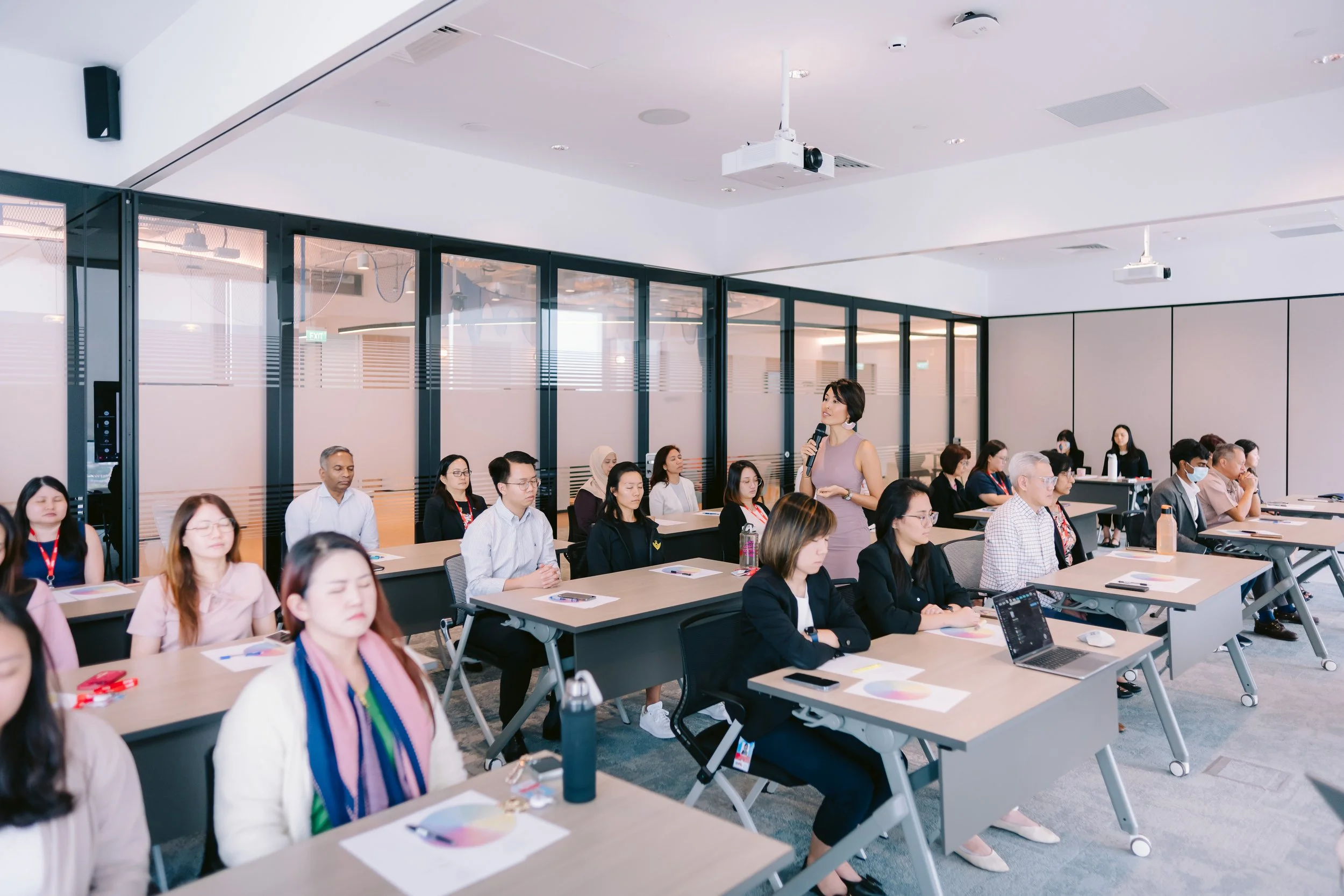
A company wellness programme can offer a shared language around stress, capacity and emotional regulation. A seminar can help managers recognise pressure earlier and create a moment in which colleagues meet as people, not only as roles—a form of connection I have reflected on in An Offering of Human Connection.
But a programme cannot decide how deadlines are set, whether after-hours messages are normal, or whether someone is believed when they say they are at capacity. That is the work of leadership.
The programme does not need to repair the whole organisation to be useful. It does, however, need to sit within a culture willing to act on what it reveals.
A seminar can give language to the room.
Leadership determines whether that language survives the next demanding week.
For teams who also need to experience this learning in the body, Yoga for the Workplace can offer an adaptable space for mindful movement, breath and supported rest. The practice does not replace honest conversations about workload, boundaries or communication. It gives people a felt experience of the recovery that the culture must then learn to protect.
Five conditions that make a wellness programme credible
Credibility is built by what the organisation does around the programme.
1. The time is protected
The session should be part of the working day, not borrowed from rest or quietly repaid through longer evenings. Managers need to remove competing demands and make the permission to attend believable.
For a fuller discussion of participation barriers, link here to When Workplace Wellness Feels Like More Work.
2. Managers model the behaviour
A leader who speaks about balance but sends routine midnight requests teaches more than any wellbeing statement.
Modelling does not mean appearing calm all the time. It means making recovery visible, clarifying what genuinely needs a quick response and showing that rest does not diminish professionalism.
This is where leadership and workplace wellbeing meet: not in a policy document, but in ordinary behaviour.
3. Workload is discussed honestly
When pressure is structural, support cannot end with teaching individuals how to cope. Leaders may need to reprioritise, remove low-value work, clarify roles, adjust deadlines or resource the team differently.
A credible workplace wellbeing culture allows “I am at capacity” to begin a conversation rather than end someone’s reputation.
4. Communication norms support recovery
Words such as urgent, flexible and available can mean different things to different people. Make them concrete.
Which channel is for a genuine emergency? What response time is expected? Do messages sent after hours require action? Which meetings can be shortened, moved or declined?
Clarity reduces the background vigilance of never knowing when work may enter the room.
5. Employee feedback leads to visible action
Ask what is creating strain, then share what was heard, what will change, what cannot yet change and why.
Even a modest action can build trust when people see a clear line from their voice to a decision. Listening without rushing to fix is also part of the art of holding space explored in OASIS trainings.
Frequently asked questions
Can a company wellness programme work during a high-pressure period?
Yes, particularly when the pressure is time-limited, priorities are clear and recovery is planned. The programme should support people through a demanding season, not disguise a permanent capacity problem.
How can leaders support workplace wellbeing without lowering standards?
Healthy standards and humane working conditions are not opposites. Leaders can set clearer priorities, distinguish true urgency from preference, discuss workload openly and protect recovery so that performance is not built on constant depletion.
How can HR tell whether the workplace wellbeing culture is changing?
Look beyond attendance. Notice whether there are fewer false urgencies, clearer response expectations, managers who respect boundaries, earlier conversations about capacity and visible action following employee feedback.
Culture appears in ordinary decisions before it appears in a survey score.
Wellbeing is not a reward for finishing the work
There will always be another message, deadline or cycle. If wellbeing is delayed until everything is complete, it becomes a horizon that keeps moving away.
As I have written before, a new year begins in the body, not the calendar. Organisational change is similar. It begins not on the launch date of a programme, but in the behaviours that follow it.
A programme can offer shelter for an hour.
Leadership shapes the climate people return to.
A company wellness programme can work within Singapore’s always-on culture. Its purpose, however, should not be to help people endure permanent urgency more gracefully. It should help the organisation notice the rhythm it has created—and give leaders and teams a shared language for changing it.
The strongest workplace wellbeing culture is not one that promises every day will be calm. It is one that can distinguish genuine urgency from habit, protect recovery and allow feedback to change how work is done.
Explore Workplace Seminars that help teams and leaders develop a shared language around stress, capacity and sustainable ways of working, or discover the ways to invite OASIS into your workplace.
Perhaps the pause becomes credible when people no longer have to choose between believing the programme and believing the culture.