
Why Does the Body Sometimes Soften Before the Mind Does?
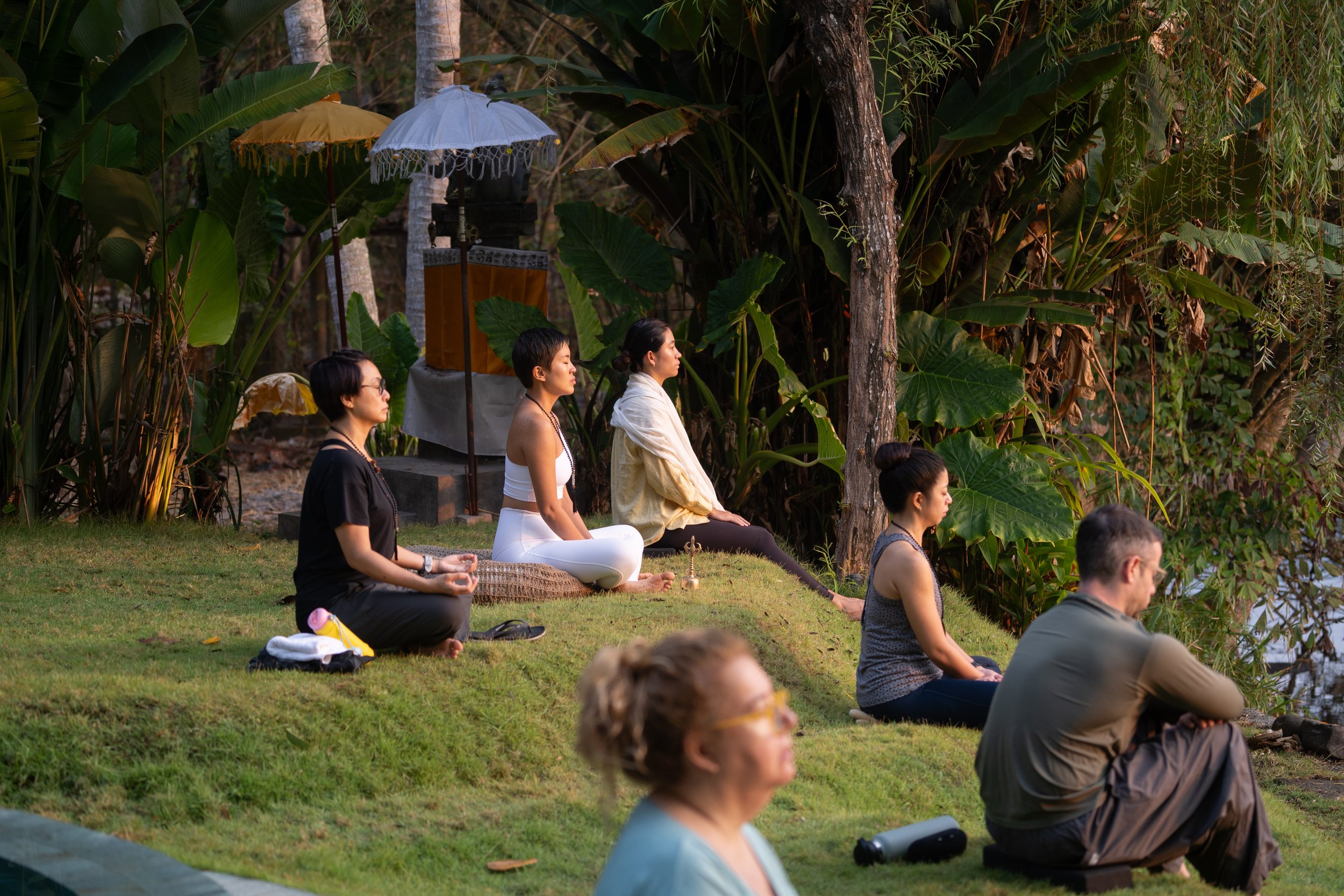
In Restorative Yoga, I often begin by giving the body something it rarely receives: enough support to stop holding itself up.
Bolsters carry the weight. Blankets bring warmth. Sometimes sound is woven into that stillness, and I notice a mismatch. During sound therapy, the mind may still be drafting tomorrow’s email while the jaw has unclenched. The thoughts continue, yet the hands are no longer gripping the day.
It does not happen for everyone, or in every session. Nor does it mean the body always relaxes before the mind. But can one part of us feel supported while another is still busy?
When relaxing becomes another task
Many of us approach rest as though it were an instruction.
I should relax now. I should stop thinking. I should be getting more from this.
The mind stands over the experience like a manager checking whether the task is complete.
The body may tell a less orderly story. A shoulder lowers while thoughts continue racing. The breath feels less hurried, although an unfinished conversation still circles. The back settles into the mat without producing a dramatic release.
When I speak of “softening”, I am not describing a clinical state, guaranteed benefit or hidden healing process. I simply mean that one place may feel as though it is working less hard.
Softening is not an achievement. It is something we may—or may not—notice.
Restorative Yoga remains the ground beneath the sound
Sound is part of the wider toolkit I draw upon, but it is not the centre of my work.
Restorative Yoga is the ground beneath it: creating physical support, reducing unnecessary effort and allowing people to meet themselves without performance. Mindfulness, breath awareness, sound and wellbeing education may be woven around that foundation.
I may include sound as one element within a restorative experience—something attention can rest upon while the body is supported—not as a way to force a particular state.
The same tone may comfort one person, distract another and feel neutral to someone else. A well-held practice leaves room for all three.
What might physical softening feel like?
Usually, it arrives without fanfare.
The tongue rests differently in the mouth. Fingers uncurl. The legs feel heavier against the floor. There may be a sigh or less urgency to keep adjusting.
There is a difference between telling your shoulders to drop and realising they already have.
These observations can follow us beyond the mat. A commute, meeting or pause before replying can become an opportunity for a simple body check-in during the working day.
The purpose is not to search for proof. It is to become familiar with the body’s quieter language: pressure, warmth, weight, effort and space.
The mind may still be sitting at its desk
Even while the body feels supported, the mind may continue to plan.
Is this helping? Did I send that document? How long is left?
This does not cancel what is being noticed. According to Harvard Health, body-scanning practices can build awareness of the connection between physical sensations and mental experience. Awareness is not another command to feel better. It is an invitation to notice honestly.
The same principle appears in meditation in Singapore: practice does not require removing every thought. Sometimes the first shift is recognising that the mind is active without treating that activity as failure.
A busy mind and a slightly less guarded body can both be true.
What can research tell us about sound?
Interest in sound-based practices is growing, but the evidence should be held carefully.
A 2025 systematic review of 14 quantitative studies on Tibetan singing-bowl interventions reported possible benefits for anxiety, mood and some physiological measures. It also highlighted small samples, inconsistent methods and limited follow-up, making firm conclusions difficult.
For me, that uncertainty is clarifying. It allows sound to remain one supporting strand within a wider restorative practice—not the whole story, and never a promise that everyone will respond alike.
What if nothing softens?
Some people remain restless. A sound may feel uncomfortable. Someone may feel alert, distracted or no different when the session ends.
That is not failure.
A sound-based practice is not a test of relaxation. Nor should we insist that an invisible change must have happened “under the surface”. Respecting an unchanged experience is part of respecting the person.
This is where exploring how we listen matters more than searching for a correct reaction. Hearing a sound, noticing a physical sensation and bringing attention to an experience are related, but not identical.
Awareness may arrive as ease, restlessness or the recognition that the body is not ready to put anything down yet.
For workplaces, the setting matters too
For HR and management teams considering sound therapy in Singapore, the useful question is not, “Will this make everyone relax?” It is, “What support does this team need today?”
A physically tired group may benefit from Restorative Yoga, where props reduce demand on the body. A mentally overstimulated team may appreciate sound as a point of focus within that setting. Another group may need a seminar first, so employees can understand stress and develop language.
People also need permission to adjust, remain silent or opt out. The time should be protected, not borrowed from lunch or repaid through a later evening.
The World Health Organization advises that individual support should sit alongside organisational action on risks such as excessive workloads, limited control and unsupportive cultures. A restorative session may open a door. It cannot become the whole building.
Perhaps softening is simply the body feeling supported
I return to the beginning.
The mind is still writing tomorrow’s email. But the hands are open now. The floor is carrying more of the weight.
That does not prove sound therapy has “worked”, or that the body always softens first. Perhaps one small place has simply found enough support to stop bracing for a moment.
Restorative Yoga remains the foundation of my work because it begins there—not with a demand to change, but with conditions that may make change possible. Sound can accompany that process. Mindfulness can help us notice it. Education can give us language for it.
The thoughts may continue.
And still, something in us may realise it does not have to hold quite so tightly.
Could your workplace make room for a more restorative pause?
Your team may not need another activity telling them to switch off on command. They may need an experience shaped around support, education and choice.
Explore ways to invite OASIS into your workplace, or begin with a Workplace Wellbeing Seminar to understand what your people need before choosing the practice.
Frequently asked questions
How does OASIS use sound healing alongside Restorative Yoga?
Restorative Yoga remains Gabrielle’s primary practice. Sound may support mindfulness, breath awareness and wellbeing education within a session. It is one pathway into OASIS’s wider work, not a stand-alone specialist identity.
Is it normal for thoughts to continue during sound therapy?
Yes. Someone may notice physical comfort while the mind remains active. Others may feel restless or unchanged. There is no required sequence or single “successful” response.
Which workplace format is right for a tired or overstimulated team?
Begin with the team’s needs. Restorative Yoga may suit physical tiredness; sound can support attention within a restorative experience; and a seminar can build understanding before practice. The elements can be combined.