
How Can a Simple Body Check-In Support My Health and Wellness at Work?
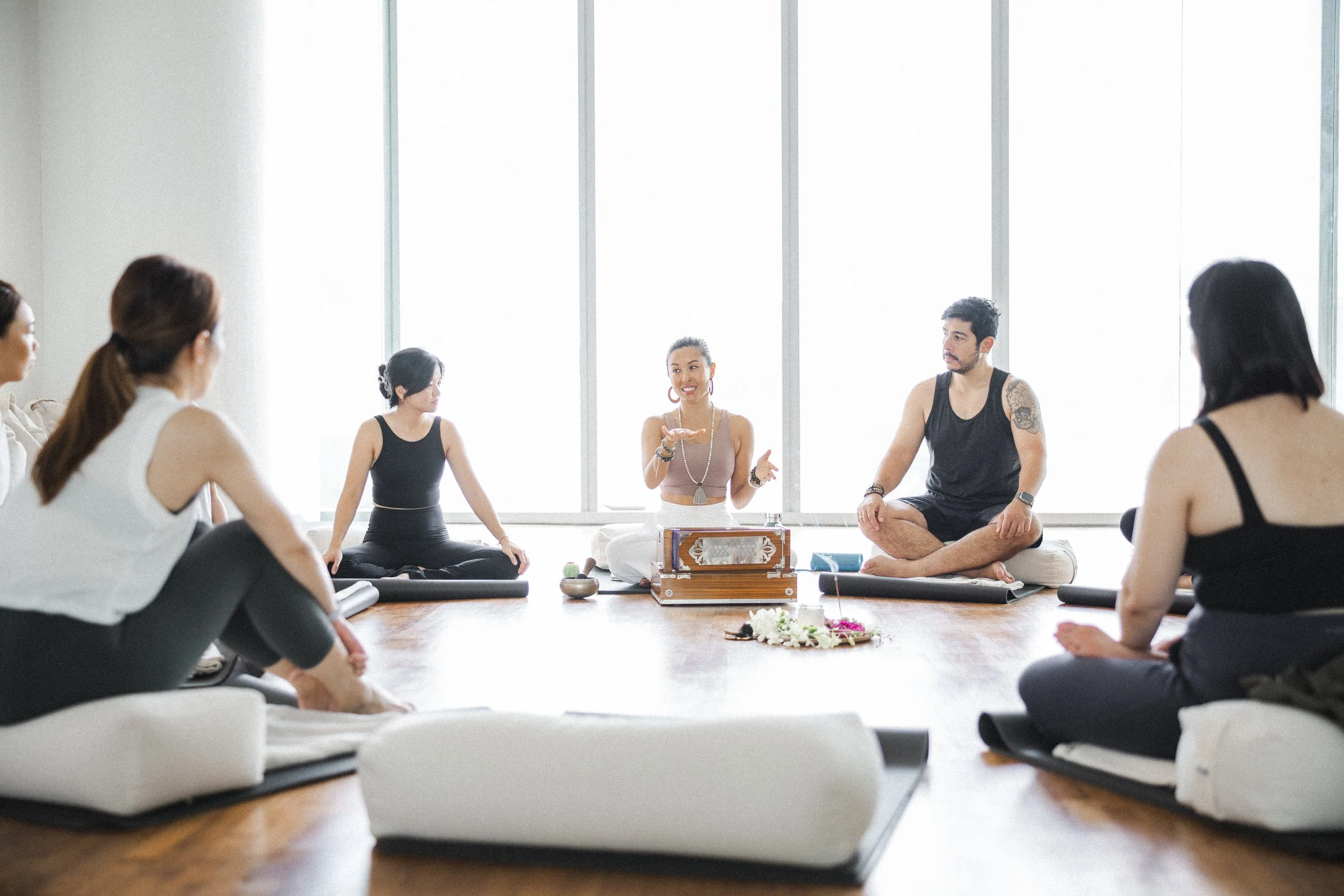
Before I began teaching yoga, I knew what it was like to move through corporate life while carrying more stress than I realised.
Looking back, what stays with me is not only what I was thinking during those periods, but what my body was quietly doing alongside me. The shoulders that had crept upwards. The breath I had barely noticed. The strange tiredness that seemed to arrive before the working day was over.
It made me wonder whether part of health and wellness at work begins somewhere much simpler than we imagine.
Not with fixing ourselves.
Just with noticing.
We check almost everything at work—except ourselves
During an ordinary working day, we check our inboxes, calendars, deadlines, messages and progress.
But when was the last time you checked how your body felt?
Perhaps you opened your laptop this morning feeling relatively spacious. Three meetings later, you are leaning towards the screen, your jaw is tighter and your feet have somehow disappeared underneath your chair.
None of this automatically means something is wrong.
It is simply information.
Harvard Health Publishing explains that when we experience stress, the body's stress response can increase heart rate, quicken breathing and tense the muscles.
The American Psychological Association also notes that prolonged stress may be accompanied by experiences such as fatigue, headaches, muscle tension and difficulty concentrating.
Yet I do not think we need to turn every sensation into a symptom.
Sometimes the more useful question is simply:
What has changed in me since this working day began?
The body comes to every meeting too
Work is often treated as though it takes place almost entirely from the neck upwards.
We think. Decide. Present. Analyse. Reply.
Meanwhile, a body is sitting underneath all of that.
It is breathing while we read an uncomfortable email. It is holding our posture through another video call. It is responding to urgency, concentration, interruption and uncertainty whether or not we consciously notice.
There is a term researchers use for our perception of internal bodily signals: interoception. Research into mindfulness and interoception is still developing, but a recent meta-analysis found that mindfulness-based training was associated with improvements in people's self-reported awareness of internal bodily experience.
For me, the important part is less technical.
We cannot always choose what happens during a working day.
But we can become a little more familiar with how we are experiencing it.
That is also why conversations about mental wellness in the workplace need to include the body rather than treating physical and mental wellbeing as separate worlds.
Try noticing before you try changing
If you have a minute, you might try this where you are.
You do not need to close your eyes.
You do not need to sit perfectly straight.
And you certainly do not need to become calm.
Notice your contact.
Where is your body being supported by the chair, floor or desk?
Notice your shape.
Without correcting it, what position has your body found?
Notice your breath.
Can you feel it somewhere—the chest, ribs, abdomen or nose? Does it feel spacious, hurried, shallow or simply difficult to notice?
Notice effort.
Is somewhere working harder than you realised? The jaw? Shoulders? Hands? Eyes?
Notice attention.
Do you feel focused, scattered, alert, tired—or somewhere between those words?
Then one final question:
Is there anything your body seems to need right now?
Perhaps the answer is movement.
Perhaps water.
Perhaps a different sitting position.
Perhaps a pause.
Perhaps nothing.
The body check-in is not a test you pass by feeling relaxed.
Look for differences, not diagnoses
One way I find body awareness more useful is to notice the difference between two moments.
Before a long meeting and afterwards.
When you first sit down in the morning and before lunch.
Before opening the difficult email and once the conversation is finished.
After an uninterrupted stretch at your desk and after walking somewhere for five minutes.
Instead of asking, What is wrong with me?, try asking:
What changed?
You may begin noticing patterns.
Maybe your breathing changes during back-to-back meetings. Perhaps your concentration becomes foggier after several hours without moving. Perhaps your shoulders feel completely different after lunch.
Or you may notice very little.
That is still noticing.
This is different from watching for longer-term changes that may require professional support. A body check-in is not a diagnostic tool, nor should persistent or concerning symptoms be explained away as workplace stress.
It is simply one way of becoming less absent from your own experience.
What the body notices can tell workplaces something too
This is where health and wellness becomes more than personal responsibility.
If an employee repeatedly notices tension, fatigue or difficulty concentrating, awareness may help them recognise what is happening.
But it does not automatically mean the solution sits entirely with them.
The World Health Organization's guidance on mental health at work recommends both individual support and organisational interventions addressing working conditions and psychosocial risks.
That distinction matters.
We should not teach people to breathe more deeply while ignoring a culture that never allows them to come up for air.
For HR teams and leaders, body awareness can therefore raise a different question: not “How do we make employees more resilient?” but “What are people repeatedly experiencing here, and what might that tell us about how work is organised?”
When selecting corporate wellness activities for your team's needs, this distinction is worth carrying with you.
Where can yoga fit into workplace wellbeing?
Yoga is one place where this kind of noticing can be explored deliberately.
Within yoga corporate wellness programs, the value does not have to lie in achieving a complicated posture or giving everyone the same experience.
Sometimes the practice is simply an opportunity to feel movement again.
To notice effort and ease.
To discover where the breath moves when nobody is asking you to answer an email at the same time.
When colleagues practise together, that pause can also become shared without requiring forced conversation or disclosure—something I explore further in staff wellness and team connection.
And when organisations are choosing who should facilitate these experiences, it is worth considering not only the activity itself, but whether the corporate wellness workshop provider understands the people, pace and realities of the workplace they are entering.
Noticing comes before responding
There is one distinction I keep returning to.
Noticing that your shoulders have tightened while typing a difficult reply is one thing.
Knowing what to do with that awareness is another.
The first creates information.
The second creates choice.
In How Can Yoga Help Me Pause Before I Respond?, I explore that next part of the conversation: what might happen in the small space between experiencing pressure and responding to it.
But we do not have to rush there.
Awareness deserves its own moment.
Perhaps health and wellness begins with one quieter check-in
By the end of today, you may have checked your inbox dozens of times.
Your calendar several more.
Perhaps your messages so often that you have stopped counting.
The quieter question is whether, somewhere amongst all of that checking, you noticed yourself.
A meaningful approach to health and wellness at work does not ask us to monitor every sensation or transform every difficult day into perfect calm.
Sometimes it begins much more gently.
A shoulder noticed.
A breath felt.
A body remembered.
And perhaps, once we begin hearing what our bodies have been saying quietly all along, both individuals and workplaces can become better at asking what genuine support might look like.
Ways to invite OASIS into your workplace
If your team could benefit from space to understand stress, reconnect with the body and explore wellbeing without turning it into another performance, discover OASIS Workplace Wellbeing.
Want to help your team understand stress more deeply?
Explore Workplace Wellbeing Seminars.
Want to create an embodied pause within the working day?
Explore Yoga for the Workplace.
Frequently Asked Questions
What is a body check-in at work?
A body check-in is a brief moment of paying attention to your present physical experience. You might notice your posture, breathing, areas of effort or comfort, and how focused or tired you feel. The aim is not to diagnose yourself or force relaxation. It is simply to become more aware of what you are experiencing before deciding whether anything needs to change.
What if I notice pain or other physical symptoms during a body check-in?
Body awareness should never replace appropriate medical care. Persistent, severe, unusual or concerning symptoms deserve assessment by a qualified healthcare professional rather than being assumed to be caused by stress. A workplace wellbeing practice can support awareness, but it cannot diagnose the reason for a physical symptom.
How can yoga support health and wellness in the workplace?
Accessible workplace yoga can provide a structured opportunity to move, pause and pay attention to breathing and physical experience during a working day. Its role is not to make employees endlessly resilient to unhealthy conditions. Ideally, yoga forms one part of a broader wellbeing approach that also considers workload, management practices, workplace culture and the needs of the people taking part.