
What Can Sound Hold When Words Are Not Enough?
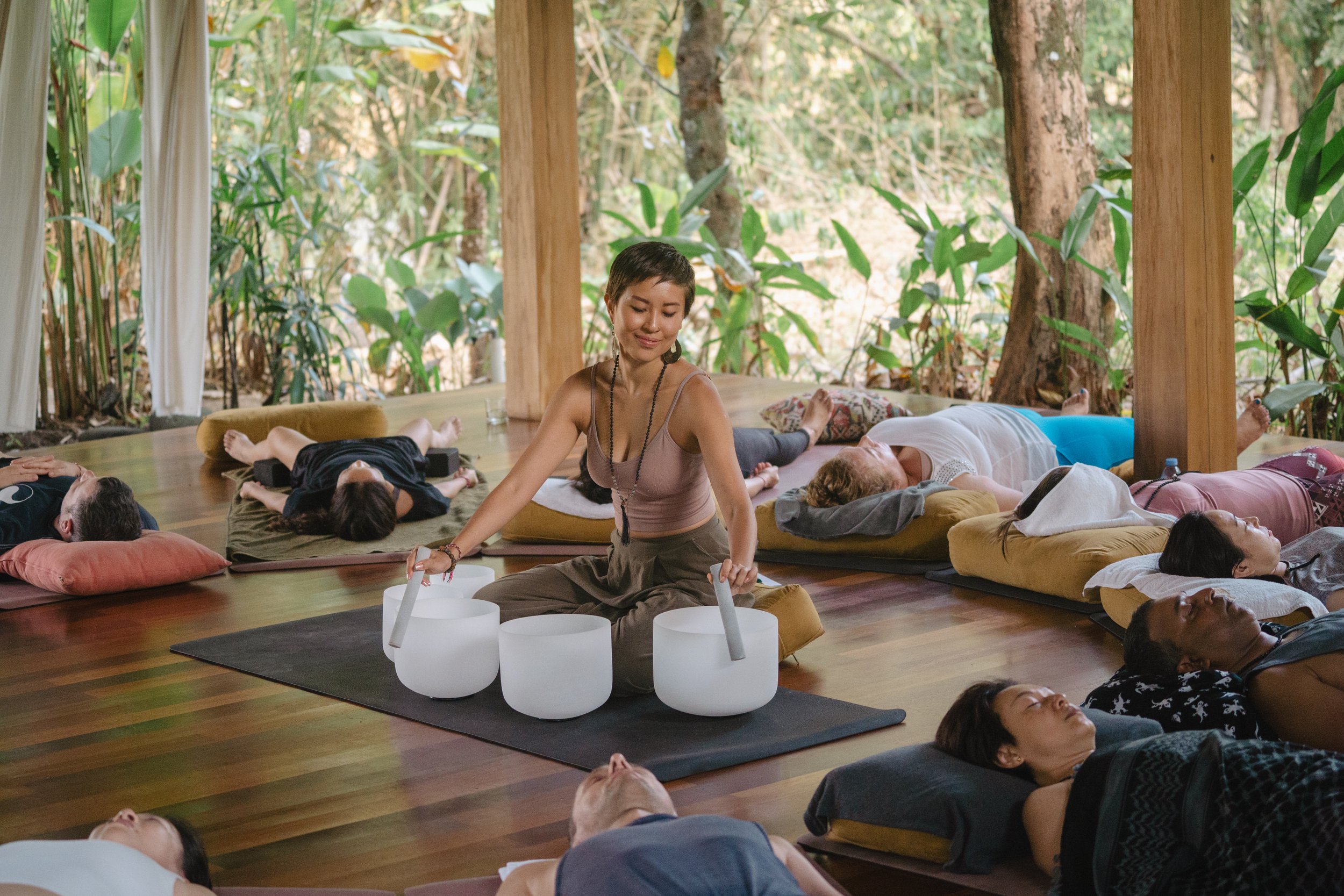
In my work with Restorative Yoga, I often return to the moment when effort begins to loosen. It may happen through the support of a bolster, a quieter breath or the first sustained note entering the room. Sound is not the whole of my work; it is one pathway I use to help people move from doing towards receiving.
This is part of what may draw someone to a sound bath in Singapore. Daily life asks us to explain and find the right words for how we feel. Yet sometimes an experience is still taking shape. We do not need to turn it into a story.
Perhaps we simply need somewhere to arrive.
What happens during a sound bath?
Despite the name, there is no water involved. A sound bath is a facilitated listening experience in which participants usually rest seated or lying down while voice and resonant instruments create layers of sound and silence.
There is nothing to perform. You do not need to meditate well, follow every note or achieve a particular state. Your attention may settle, wander and return.
Within OASIS, sound forms part of a wider restorative toolkit. It may accompany Restorative Yoga, mindfulness or guided rest, giving the mind a gentle point of focus as the body is invited to do less. My reflections on Nada Yoga—the yoga of sound and vibration explore another way sound can lead towards listening and silence.
Some people notice their breath or the weight of the body against the floor; others notice nothing dramatic. I explore what we might notice physically during a session more closely in Why Does the Body Sometimes Soften Before the Mind Does?
Before asking what sound feels like, however, there is another part worth noticing: the relief of not having to explain ourselves.
A room without a question at the door
Conversation can be deeply supportive. But speaking about ourselves also requires effort.
Where should the story begin? Which word is accurate? How much should I share?
A sound bath can feel like entering a room without a question at the door. You need no polished intention. You may be peaceful, distracted, uncertain or curious.
Perhaps what we feel is not hidden. Sometimes it is merely unfinished.
Sound can sit beside that unfinishedness without demanding a conclusion. For someone searching for sound healing in Singapore, this may be one of its quieter appeals: listening allows us to participate without asking us to disclose.
It does not replace language, counselling or human connection. It simply offers a different order.
First, we listen. Words can return later.
Receiving does not mean switching off
It is tempting to imagine that a successful session should empty the mind. That quickly becomes another assignment: I must relax. I must stop thinking. I must do this properly.
Receiving asks for something gentler.
A tone may hold your attention before the mind returns to an unfinished email. Silence may become clearer because of the sound before it. Listening is not a concentration test, and the experience need not end in revelation.
The invitation is not to switch yourself off. It is to stop managing the experience quite so closely.
Sound can become one pathway into stillness, alongside breath, mindfulness and restorative practice. As I share in What Do We Hear When We Finally Step Into Silence?, silence does not require thought to disappear. It may begin when our relationship with thought becomes less demanding.
What does the research actually tell us?
Sound-based practices are sometimes surrounded by sweeping claims. I prefer to remain curious without asking the evidence to say more than it can.
A 2023 randomised controlled trial involving 50 adults with high state anxiety compared one Tibetan singing-bowl session with progressive muscle relaxation and a waiting-list control. Both active groups reported lower anxiety than the control group, while the singing-bowl group showed changes in some heart-rate-variability measures. The study examined an immediate response; it did not establish long-term healing. The study is indexed on PubMed.
A later systematic review found potential benefits for stress reduction and psychological wellbeing, but noted that the studies were limited and varied.
This feels like a responsible place to stand: interested, open and honest. Sound may support relaxation for some people. It is not a cure or a substitute for appropriate healthcare or psychological support.
A shared experience without compulsory sharing
Many corporate activities ask employees to contribute: introduce yourself, solve something together, share a reflection. Even wellbeing can become another setting in which people feel evaluated.
A thoughtfully facilitated sound experience offers another form of togetherness. Colleagues can share time and space without being asked to reveal something personal afterwards. Connection is allowed to remain quiet.
For HR and management teams considering a sound bath in Singapore, the conditions matter as much as the activity. People should be able to sit instead of lying down, keep their eyes open, change position or step outside. Sharing should remain optional. The time also needs to be protected.
Sound may offer an entry into stress awareness and restorative practice, but it cannot repair an unsafe culture or compensate for an unreasonable workload. The World Health Organization recommends organisational interventions, manager and worker training, and individual support as complementary parts of workplace mental-health action.
Wellbeing is not only what employees practise. It is also what the workplace makes possible.
Words can return in their own time
I return to the moment with which I began: effort loosening through a supported body, a quieter breath or a sound entering the room.
At the end of a sound bath, one person may have a clear reflection. Another may simply notice that the hour passed differently. Neither response is more meaningful.
Perhaps this is what sound can hold when words are not enough: attention before interpretation, company without compulsory conversation, and an experience still taking shape.
For anyone considering a sound bath in Singapore, sound need not be the destination. It can be a doorway into the wider work of listening—to the body, to our capacity and to what might support us next.
First, we receive.
Then, we decide whether anything needs to be said.
What might your team receive when nothing is being asked of them?
Your team may not always need another presentation, discussion or activity to complete. Explore ways to invite OASIS into your workplace, where sound may be woven into a broader approach that includes Restorative Yoga, mindfulness, stress education and restorative practices.
For teams that would benefit from understanding stress alongside an experiential practice, discover our Workplace Wellbeing Seminars.
Frequently asked questions
What should I expect at my first sound bath in Singapore?
You will usually rest seated or lying down while a facilitator creates an unfolding sound experience. No meditation experience is required, and there is no single correct response. A well-held session should also offer the option to sit, keep your eyes open or adjust your position.
Do I need to talk about how I feel afterwards?
No. A session may include time for reflection, but sharing should remain optional. The purpose is not to produce an emotional disclosure or impressive insight. Sometimes the experience becomes clearer later; sometimes it remains a quiet hour.
How can sound support a wider corporate wellness programme?
Sound can offer a receptive counterpoint to educational or discussion-led sessions. It may sit alongside Restorative Yoga, mindfulness and seminars on stress, helping employees experience rather than only discuss a different pace. It is most meaningful when the organisation also protects the time and addresses the working conditions affecting wellbeing.